Stay connected. Subscribe today.

Wednesday, October 30, 2013

LOOK: "What are those cranes popping up over the trees along I-90?"

What's all that work along I-90? Click for a larger view. (Image originally posted August 2013)

Seeing underground work from the air gives huge projects a whole new perspective.

When you see our cranes above treetops along I-90, you know work is happening but it's tough to know what that work is. Here's an aerial view of three huge Project Clean Lake projects going on at this location we call Nine Mile Creek in Bratenahl.


Those three projects include the Euclid Creek Tunnel, a Tunnel Dewatering Pump Station, and an electrical substation to power both the work and the resulting infrastructure.

Friday, October 25, 2013

CUTE: 11 of the cutest animals we've seen on the job, prepare to "Awww!"

Whether in the field or on site, our operators, investigators, and security staff have seen all kinds of cute critters. Here are some of the kinds of animals our employees have photographed while on the job.

Alligator: Yes, it's true. We found this guy in Big Creek and rescued him before he froze. Here's the full story.

Thursday, October 24, 2013

OMG! (Oh my! Green!): Eco-friendly dye helps trace sources of pollution


The green you see is not pollution. But it can help identify pollution sources.

When our Water Quality & Industrial Surveillance team is called in to find the source of a hazardous spill or an illegal discharge—like this one in Rocky River last year—the crew conducts dye testing like this. Investigators release an environmentally safe dye into the collection system, most commonly storm sewers in the area, to confirm the flow's source, route, and ultimate destination.

If you ever see a suspicious discharge in a Northeast Ohio waterway, you can contact our Environmental & Maintenance Services Center at (216) 641-6000 or tweet @neorsd.

Wednesday, October 23, 2013

Thursday, October 17, 2013

LOOK: Like some kind of futuristic dissection, photos tell the story of @MackenzieTBM's disassembly

Today we received this amazing set of images that show our tunnel boring machine Mackenzie as she continues to be disassembled 200 feet underground.

Last month, the 27-foot-tall Mackenzie finished digging the Euclid Creek Tunnel, a journey that spanned three miles under Cleveland and Lake Erie. The tunnel won't be officially complete until 2015, but Mackenzie has done her job. She's being transported back to Bratenahl in pieces where she began her dig in 2012.

These photos show Mackenzie up close as she is being disassembled piece by enormous piece.


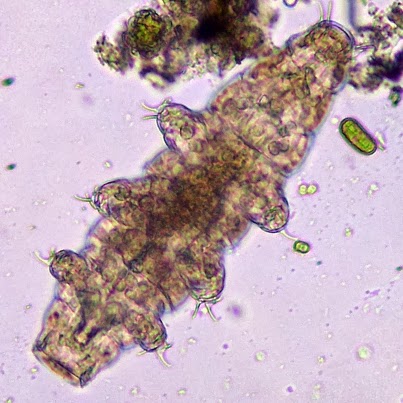
#h2olloween / LIST: 5 scary-looking microscopic wastewater creepy-crawlies

Black cats, haunted houses, things that go bump in the night, none of these Halloween mainstays evoke the level of fear that dirty water should.

We asked our Analytical Services staff to share some of the scariest creatures they find thriving in the wastewater treatment process. Here are their top five, but don't be fooled by their scary looks; these microscopic little guys tell us a lot about the job we're doing.


1. Water bear: A type of multi-celled organism, the water bear is an indicator of the age of wastewater sludge (also known as biomass). Scariest feature: It has four pairs of legs and eight claws on each foot.

Thursday, October 10, 2013

VIDEO: Kids news program Newsdepth goes deep with Mackenzie, how sewers work


Mackenzie dug her way into hundreds of Ohio schools late last month.

After our tunnel boring machine Mackenzie finished digging the 18,000-foot-long Euclid Creek Tunnel in August, she was brought to the surface piece by piece, and a school news program featured her accomplishment in September.

The clip above is from the September 18 Ideastream program Newsdepth, a weekly news program for Ohio students in grades three through eight. Here's the complete half-hour episode.

Tuesday, October 8, 2013

PIC: It's a bug's life.


In this image, Wastewater Analyst Lindsay Koplow is culturing water fleas. But this culture has nothing to do with the Cleveland Museum of Art.

The fleas are cultured—cultivated and nourished—and maintained every day of the year. Seems like a lot of work for a bug, no? Well the water fleas are part of a test we conduct to ensure we are treating the wastewater to its highest standards. It's known as whole effluent toxicity, or WET testing. If the fleas weren't healthy, it would affect the validity of our test results.

Healthy fleas are happy fleas, and that means more reliable results.