Stay connected. Subscribe today.

Tuesday, September 5, 2017

TECH: Sewers, iPads, and drones among 5 innovations at work for clean water


Not all tech innovations are apps. Take a look at five innovations one utility has put to work for efficiency and water quality.

How do you innovate the lake?

Lake Erie is perhaps the most challenged of the Great Lakes, but with those challenges come opportunities for innovation. Sewers have been taken for granted as a significant technological advance, perhaps even since Cleveland installed its first sewers in the 1800s. Which is why it can be easy to overlook the vast amount of innovation at work and in design in the world of utilities.

Here are five examples we have working for clean water in the field that help to protect our Great Lake.


Drones are an eye in the sky

We are responsible for a regional stream network more than 420 miles long. When our Regional Stormwater Management Program launched in 2013, inspections of problem locations were documented on foot as workers physically waked the streams for planning purposes. But the most recent master-planning effort involves drone data collection. Aerial photography captures more raw images for site assessment, analysis and communication. Most recently, we covered 60 miles of the Cuyahoga River watershed with drone technology in less than two weeks.


Grading on a curve

Microtunneling involves boring a tunnel underground rather than opening up a trench at the surface. That alone is intended to minimize disruption during construction. But our Dugway West Interceptor Relief Sewer also featured a rarely used technology known as curved microtunneling. It eliminated two access shafts at the surface, saving money and reducing impacts on the neighborhood above the project.


iPads keep documents and data at the ready

Our sewer maintenance and stormwater inspection and maintenance teams use iPads for GIS, asset location, and site investigations. Finding collection systems in the field in real time increases productivity, and the ability to report from the field improves response time.


Piloting treatment tech could save dollars, improve water quality

We have a 25-year plan to reduce Lake Erie pollution by 4 billion gallons a year. Doing so is costly, but proper planning has given us potential to save money through innovative approaches. One is chemically enhanced high-rate treatment. Implementing CEHRT at our plants, like Westerly shown here, eliminates the need for extensive construction, reduces operation and maintenance costs, and meets our water-quality requirements through simultaneous disinfection.


Maps tell the story

Storymaps are mashups. They use GIS and a variety of web tools to communicate through visually appealing maps like mobile storyboards. One example captures progress and success of our Green Infrastructure Grant program, pinpointing project locations, project photos, and descriptions of benefits. Future construction will be documented for customers in a similar way.

Monday, May 8, 2017

GREEN: Can green make a lot of difference? Parking improvements will manage stormwater in Slavic Village

Green infrastructure grant funds contribute to a more sustainable neighborhood design

Slavic Village Development commemorated the start of construction of a new parking lot along Fleet Avenue with a groundbreaking ceremony on Monday, May 8. The parking lot, located at 6305 Fleet Avenue, directly east of Seven Roses Polish Delicatessen, includes a lot with permeable paver patio and bioretention features.

The lot will reduce impervious area in the neighborhood by 1,000 square feet: 300 square feet of bioretention features and a 600-square-foot patio will help infiltrate 30,000 gallons of stormwater into the ground each year.

In 2015, Slavic Village Development was awarded a Green Infrastructure Grant from the Sewer District to help fund this project. The $43,814 grant is approximately half of the entire project cost. The grants are available to communities and non-profit organizations in the Combined Sewer Area who are interested in implementing water resource projects that remove stormwater from the combined sewer system.

Green Infrastructure includes stormwater source control measures that store, filter, infiltrate or evapotranspirate stormwater to increase resiliency of infrastructure by reducing stress on wet-weather drainage and collection systems which increase co-benefits in support of healthy environments and strong communities.

The parking lot is expected to be complete by early July.


Tuesday, April 18, 2017

EVENTS: #SewerU May 17, special tech tour May 18 to mark Infrastructure Week

Infrastructure Week shines a spotlight on the often-overlooked systems that help make daily life function. Two special events in May will cast that light in two colors: Green and gray.

We are excited to host our fourth Sewer University #SewerU Wednesday, May 17 at the Cleveland Metroparks Watershed Stewardship Center at West Creek, and our first-ever Tech Tour of our Westerly Wastewater Treatment Center in Cleveland Thursday, May 18.

Both events will be hosted during Infrastructure Week, a national education and awareness campaign, May 15-19, 2017.


Sewer University: Green infrastructure edition
Wednesday, May 17 | Register today
Cleveland Metroparks Watershed Stewardship Center at West Creek

SewerU is an introductory-level two-hour course sharing the history and future of clean water in the Cleveland area. This session will shift the focus to green infrastructure and how the Sewer District is implementing and evaluating GI opportunities on recent, current, and upcoming projects.


Tech Tour: Westerly Wastewater Treatment Center
Thursday, May 18 | Register today
5800 West Memorial Shoreway, Cleveland

Public tours of our facilities are often bird's-eye-view glimpses at the work involved in keeping our Great Lake great. But this special Tech Tour event will be a behind-the-scenes down-and-dirty technical analysis of the treatment process. You'll see the gray infrastructure that keeps flow moving and the biological systems that ensure water is treated safely. You'll never look at your toilet the same way again. Space is limited to 12 participants!

Friday, April 7, 2017

EVENT: Pitch those pills on April 22 when you visit EarthFest

Spring has sprung and of course with a change in weather comes time for spring cleaning. In addition to squeegeeing windows and deep-cleaning carpets, you also need to take some time and “spring clean” your medicine cabinet.

Chances are, your medicine cabinet is filled with expired or unused prescription and non-prescription medications including pills, blister packs, creams and inhalers. As a parent, you likely have medications your children have outgrown.

Medical professionals used to recommend disposing of unwanted medications by flushing it down the toilet or rinsing it down the drain. But wastewater treatment plants are not designed to remove these medicines from wastewater, so they may pass through the treatment process unchanged. When the treated water is released into the Cuyahoga River and Lake Erie, it can still contain traces of these medicines.

The Sewer District makes it easy to #PitchThosePills and safely dispose of unwanted medications on April 22. We are partnering with EarthFest at the Cuyahoga County Fairgrounds and will offer a Pitch Those Pills drive-by drop-off immediately outside the event’s main entrance.
Pitch Those Pills at EarthFest
Cuyahoga County Fairgrounds
Saturday, April 22
10 a.m. – 2 p.m.
No admission required! Drive by and drop off!

We will accept pills, capsules, blister packs, creams, ointments, inhalers and unused sharps (needles). We cannot accept used sharps.
If you are unable to attend this pharmaceutical collection, there are also ways to safely dispose of medications at home or other safe drop-offs. While some pharmacies may collect unused or outdated pharmaceuticals, you may choose to dispose of them at home, but keep the following tips in mind to protect your children or pets.
  • Steps should be taken to make it difficult for any person or animal to unintentionally ingest the medicine. Keep it in its original packaging. (These containers are often childproof and the labels may contain necessary information.) Use a marker to black out personal information.
  • Make pills unusable by crushing and dissolving them with a small amount of water. Absorb liquid medication with flour, table salt, or sawdust.
  • Secure any packaging with strong tape. Seal the package or dissolved liquid medication inside a non-recyclable, non-transparent container. Place this in with your household trash.
From the Northeast Ohio Regional Sewer District's A healthy environment starts at home handbook.

Tuesday, February 14, 2017

TECH: New neorsd.org coming soon, redesigned to give users better, easier access


Our neorsd.org homepage is being improved and streamlined to give customers what they need.

Next month, we'll launch a new and improved website that offers users a more personalized experience, cleaner landing pages, and better navigation to suit desktop and mobile devices.

Key user groups—like our residential customers, vendors looking for bid and project opportunities, and job seekers—will now have prioritized content that best addresses their needs. All users will still have access to our Customer Service staff and frequently asked questions now with a more manageable navigation bar.

We'll update as roll-out details become available.


Thursday, January 19, 2017

NEWS: Leadership, transitions, and vision, a glimpse into the first 100 days of a new CEO


New presidents make their marks on America within the first 100 days of taking office. Does our new CEO expect to make her mark on water quality in her first 100 days?

Kyle Dreyfuss-Wells
Kyle Dreyfuss-Wells was tapped as our new Chief Executive Officer this month and she will assume the role officially once current CEO Julius Ciaccia retires February 10. It's inauguration week, so we asked Kyle about her vision, the peaceful transition of power, and her plans for her first 100 days.

"My vision is really about leadership," Kyle said. As an eight-year District employee and former director of Chagrin River Watershed Partners, she emphasized the role the Sewer District must play as a leader in water quality.

"We need to continue to be leaders on key environmental issues that affect our rivers, streams and lake, but also on the real infrastructure investment it's going to take to maintain the progress we've made and the progress we need to make."

Wednesday, January 18, 2017

NEWS: $7.2 million to improve water quality by supporting local infrastructure investments

New program to fund community sewer projects that impact public health, environment

@neorsd file photo
Northeast Ohio Regional Sewer District Trustees recently awarded $7.2 million to 12 communities as part of the agency’s newly-launched Member Community Infrastructure Program (MCIP).

The MCIP assists communities with local infrastructure improvements — including new sewer infrastructure, repairs to reduce infiltration and inflow (leaking pipes) and remove failing septic systems from the environment — to improve the region’s water quality, public health and the environment.

The Sewer District continues to invest billions of dollars into large, regional infrastructure projects such as Project Clean Lake, the 25-year capital program to drastically reduce the amount of combined sewage entering local waterways during heavy rains. In addition to Project Clean Lake, the Sewer District is also investing in new relief sewers, making improvements to existing interceptor sewers and solving stormwater problems that not only cause flooding and streambank erosion, but negatively impact water quality.

"The projects we are funding through the Member Community Infrastructure Program will address impacts to human health and the environment from aging local sewer infrastructure,” said Kyle Dreyfuss-Wells, Deputy Director of Watershed Programs. “We are very pleased to partner with these communities to move these great projects forward."


Monday, January 9, 2017

WATCH: Kyle and Matt bring a serving of sewer science to @WCPN


Kyle and Matt served up a heaping helping of sewer science on today's Sound of Ideas on WCPN.

Deputy Director of Watershed Programs and soon-to-be CEO Kyle Dreyfuss-Wells and Watershed Team Leader Matt Scharver appeared with Mike McIntyre today to promote their Science Cafe presentation January 9.

Friday, January 6, 2017

PROFILE: "You'd think I just walked out with a PhD," retiring Weeden remembers a proud day 30 years later

Ray Weeden, a Westerly Security Officer in 1987, displays his certificate of completion of Wastewater Treatment Plant Operation classes.

If ever there was a story of someone working their way to the top, it’s Ray.

Ray Weeden is nearing retirement as Director of Operation & Maintenance in February after more than 35 years of service.

Born and raised on the east side of Cleveland, Ray worked a variety of jobs out of high school, including security gigs. Following a downsizing at the UAW plant where he was a security guard, Ray was out of work for 13 months, and went back to school full-time. When he heard the Sewer District was hiring, he put in his application. “I started at the District on May 25, 1981, a day I’ll never forget.”

LIST: We found a can of soup at @neorsd HQ dated 2006. It's older than these 13 things.


Campbell's Chunky firehouse chili, oh how much you've missed.

A colleague found this expired can of soup dated 2006 tucked in the back of our community kitchen at @neorsd headquarters. What has this forgotten spicy beef and bean chili missed in the last 11+ years?
  1. Two terms of President Barack Obama
  2. Our 25-year Project Clean Lake green light and long-term savings
  3. LeBron leaving Cleveland...
  4. ...and returning...
  5. ...and bringing home an NBA Championship. 
  6. The launch of Twitter (2006)
  7. The creation, suspension, and relaunch of our Regional Stormwater Management Program
  8. The appointment of Ciaccia as our CEO...
  9. ...and his retirement...
  10. and the confirmation of his successor Kyle Dreyfuss-Wells.  
  11. The digging of a 3-mile-long tunnel 200 feet underground
  12. A memorable Cleveland Indians World Series run
  13. The construction and operation of a LEED-certified Renewable Energy Facility at our Southerly Wastewater Treatment Center
The list could go on. And will go on, as we don't plan to open the can anytime soon.

NEWS: Kyle Dreyfuss-Wells to be appointed CEO, sees "opportunity to build upon successes"


Leadership, passion, commitment among words used to describe Dreyfuss-Wells as CEO Ciaccia prepares for February retirement

Kyle Dreyfuss-Wells will be appointed Chief Executive Officer effective February 11. Dreyfuss-Wells will succeed Julius Ciaccia who, after more than nine years as CEO, will retire on February 10, 2017.

Kyle Dreyfuss-Wells addresses
the City Club, 2016
"Under the leadership of CEO Ciaccia, the Sewer District has become one of the most renowned progressive environmental organizations in the nation," Dreyfuss-Wells said. "I would like to thank the Board of Trustees for giving me the opportunity to build upon those successes."

Dreyfuss-Wells has been with the Sewer District since 2008, and currently is the Deputy Director of Watershed Programs. In addition to her leadership role in the development and implementation of the Regional Stormwater Management Program, Dreyfuss-Wells played a critical role in the negotiations with the federal government of Project Clean Lake, the Sewer District’s program to significantly reduce the amount of raw sewage discharging into the environment.

She has led on the Sewer District’s Green Infrastructure Program, including the implementation of the grants program, which is designed to remove stormwater from the combined system as redevelopment activities occur.

Monday, December 5, 2016

BUZZ: Where poo and pop culture collide, we are there. Watch Jessica take @BuzzFeed's poo quiz.


As your trusted authority for all things poo and pop culture, we considered it an obligation.

When BuzzFeed posted a "How poo obsessed are you?" quiz, we wondered—based on our areas of expertise—exactly how we'd fare in the final tally. We believed it would be irresponsible of us not to take it.

So we interviewed our own Community Relations Specialist Jessica Shutty, asking her to take the quiz (with no advanced knowledge of the questions). Her honesty and humor are unmatched in our social media archives, so enjoy the exchange.


In a related note, you can request a guest speaker on poo, wastewater, sustainability, stormwater, and a host of many other topics, whether humorous or professional or both.

Thursday, December 1, 2016

NEWS: "Animal rescued from drain pipe" are the feel-good stories you need right now


In a world of chaos, discord, and debate, saving animals from precarious situations make even the most hardened of hearts feel a tinge of sentimentality.

Recent weeks have seen an uptick of news stories focused on animals being rescued from danger, specifically sewer and drain-pipe rescues that draw a connection to the work we do. Our sewer crews are dedicated to protecting water quality, but when related duties call, our men and women are ready to respond.

Below are some of our favorite recent rescues, including two of our own from years past.

Monday, November 28, 2016

WATCH: Reading Rainbow's visit to a sewage treatment plant reminds us how awesome LeVar Burton is


If you watched Reading Rainbow as a kid, or if you're still tuned in to today's incarnation of the PBS classic, then this episode proves the theme song's line, "I can go anywhere."

Host LaVar Burton takes a trip to and through a wastewater treatment plant. And while some technology showcased here differs slightly from how we operate in Cleveland, the process is largely the same, and the result is clear, fresh, safe water.

But you don't have to take our word for it.


Thursday, November 3, 2016

PROFILES: Pete and Todd's Sewer Simulator showcases the sights, sounds of a subterranean system

Todd Andexler, left, and Pete Lehman, creative minds behind @neorsd's Sewer Simulator.

When you can't take guests underground, bring the underground above ground. That's exactly what Todd and Pete did.

If you attended the District’s Open House this year or last, you may have walked through our Sewer Simulator. Field Tech Operators Pete Lehman and Todd Andexler are the Sewer System Maintenance & Operations masterminds behind this unique attraction.

The duo transformed a rusty storage container into an educational display, complete with running water and props that simulate a sewer environment.

Todd said that the inspiration for the Simulator came two years ago from a virtual sewer exhibit by Pittsburgh’s wastewater agency ALCOSAN. When asked about the biggest challenge, he replied, “Building the pump system to run a continuous cycle of water. We had to build it in a way that the pipes wouldn’t overflow or run dry.” Pete proudly chimed in, “We got it right on the first try.”

Thursday, October 20, 2016

NEWS: "I can happily announce my intent to retire," CEO Ciaccia to leave a clean-water legacy

Ciaccia has served the Sewer District since 2007.
Julius Ciaccia, Jr., has announced his intent to retire from the Northeast Ohio Regional Sewer District, effective this coming January. Ciaccia has led the organization since 2007.

Ciaccia joined the Sewer District following a 30-year tenure with the City of Cleveland, serving as Director of Public Utilities and Commissioner of Water. Throughout his career, he has been extremely active with water and wastewater organizations, serving as President of Association of Metropolitan Water Agencies (AMWA), Water Utility Council Chair for American Water Works Association (AWWA), Chair at Water Research Foundation (WRF), and as President of the National Association of Clean Water Agencies (NACWA). He currently serves as a US Water Alliance board member and locally on the Cleveland Water alliance board.

Friday, October 7, 2016

WEATHER: Do Great Lakes have storm surges?

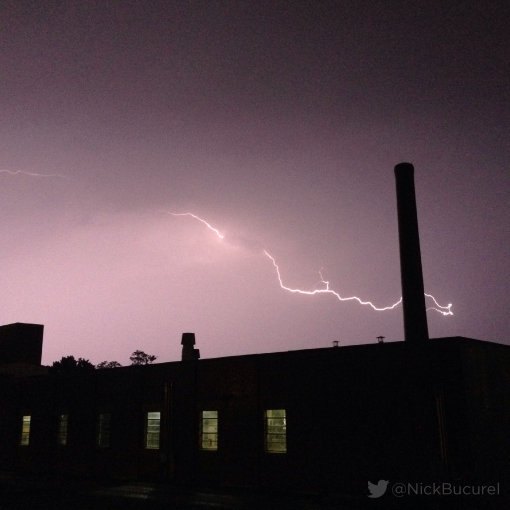
Storm clouds move across Lake Erie behind our Westerly Wastewater Treatment Plant. Nick Bucurel.
When waterborne natural disasters like hurricanes affect the coasts, one of the biggest threats is not the wind. It's the storm surge.

The surge is the dramatic rise of sea levels and wave height along a coast ahead of the hurricane. While a hurricane is an ocean phenomenon, do the Great Lakes have storm surges? The answer is yes.


Lake Erie and its sister Great Lakes' storm surges are also referred to as seiches, changes in water levels and movements caused by storms. They can be dramatic but without the surge warning that precedes hurricane events.

Michigan Sea Grant reports one of the greatest reported seiches was in Lake Michigan in 1956 when lake levels jumped 10 feet so unexpectedly that beachgoers had to run for safety.

Lightning streak behind Easterly Plant.
Wastewater treatment facilities like ours sit right along the Lake Erie shoreline. Could they be affected by a seich? Not likely. Most storms across Lake Erie blow from west to east, the same direction as the orientation of our lake. That means the eastern and western ends of the lake are more susceptible to the large-scale sloshing of the lake water levels.

Still, rain has a major effect on wastewater treatment systems (especially in older cities like Cleveland where sewage and stormwater flow in the same sewers) and regional stream networks.

Friday, September 30, 2016

WATCH: Why we do what we do.


Cleveland has amazing water resources.

And while they are so visible that they are easily taken for granted, there are also unseen resources that help make sure our lakes, rivers, and water quality are protected.

This moving #MyWaterLegacy video from the Water Environment Federation was shown at WEFTEC—a huge national water conference—this week, and we believe it showcases why we are so proud to serve our customers and our region.

What do you think?

RELATED LINKS:
  • CAREERS: Our latest job openings and career resources
  • QUICK CLIPS: See all our 2-minute-or-less videos about our water-quality work

Monday, September 26, 2016

POLITICS: Print your own "Tardigrade for President" posters and make America tardigreat again.


Let America know you stand with the tardigrade.

We love the microscopic water bear and all it means for our water-quality work, but now you too can let neighbors and co-workers know you prefer the candidate who can survive pretty much anything.

Download our five posters and print your own for your home or office.


Tuesday, September 20, 2016

WATCH: Kids asked Christen, "How can you stand the smell of wastewater?"


How can wastewater treatment plant workers spend hours around sewage and not get overwhelmed by the smell? Former Treatment Plant Operator and current manager Christen Wood gets that question a lot, and she said it's all science.