Stay connected. Subscribe today.

Showing posts with label health. Show all posts

Friday, April 7, 2017

EVENT: Pitch those pills on April 22 when you visit EarthFest

Spring has sprung and of course with a change in weather comes time for spring cleaning. In addition to squeegeeing windows and deep-cleaning carpets, you also need to take some time and “spring clean” your medicine cabinet.

Chances are, your medicine cabinet is filled with expired or unused prescription and non-prescription medications including pills, blister packs, creams and inhalers. As a parent, you likely have medications your children have outgrown.

Medical professionals used to recommend disposing of unwanted medications by flushing it down the toilet or rinsing it down the drain. But wastewater treatment plants are not designed to remove these medicines from wastewater, so they may pass through the treatment process unchanged. When the treated water is released into the Cuyahoga River and Lake Erie, it can still contain traces of these medicines.

The Sewer District makes it easy to #PitchThosePills and safely dispose of unwanted medications on April 22. We are partnering with EarthFest at the Cuyahoga County Fairgrounds and will offer a Pitch Those Pills drive-by drop-off immediately outside the event’s main entrance.
Pitch Those Pills at EarthFest
Cuyahoga County Fairgrounds
Saturday, April 22
10 a.m. – 2 p.m.
No admission required! Drive by and drop off!

We will accept pills, capsules, blister packs, creams, ointments, inhalers and unused sharps (needles). We cannot accept used sharps.
If you are unable to attend this pharmaceutical collection, there are also ways to safely dispose of medications at home or other safe drop-offs. While some pharmacies may collect unused or outdated pharmaceuticals, you may choose to dispose of them at home, but keep the following tips in mind to protect your children or pets.
  • Steps should be taken to make it difficult for any person or animal to unintentionally ingest the medicine. Keep it in its original packaging. (These containers are often childproof and the labels may contain necessary information.) Use a marker to black out personal information.
  • Make pills unusable by crushing and dissolving them with a small amount of water. Absorb liquid medication with flour, table salt, or sawdust.
  • Secure any packaging with strong tape. Seal the package or dissolved liquid medication inside a non-recyclable, non-transparent container. Place this in with your household trash.
From the Northeast Ohio Regional Sewer District's A healthy environment starts at home handbook.

Friday, August 26, 2016

PROFILES: How Kate's ability to grow has helped her career, and the health of her coworkers

Kate in her role as a maintenance worker.
Within nine years, Kate Rybarczyk’s work ethic took her from Custodian to Plant Maintenance Manager.

“As a mechanic I strengthened my problem-solving skills,” shared Kate from the Westerly Wastewater Treatment Plant. “When something wasn’t working, we'd troubleshoot to determine how we could fix it, rebuild it, or modify it.”

Kate also worked to enhance her communications skills through District self-improvement courses, and utilized the Tuition Assistance Program to get an associate's degree from Tri-C. These opportunities led to her most recent management role.

RELATED NEWS: Have you considered a clean-water career?

Outside of work, Kate’s interests include landscaping, gardening, health and fitness, and winemaking. She is well-versed in all these topics. When asked for a health tip, Kate warned against processed food. “Everyone thinks they're convenient, but studies are showing negative long-term health effects.”

Kate’s passion for health and fitness led to her involvement in the Sewer District’s Wellness program. Alongside co-worker Mitch Falatach, Kate built a community garden at Westerly visible from the employee lunchroom nearby. This year, the garden has a variety of leafy greens, green peppers, hot and sweet peppers, and tomatoes.


“The garden makes [being] healthy convenient. If the operators are here at night, on the weekend, or someone is working overtime, they can go outside and grab what they need for a salad, instead of hitting the vending machine.”

In addition to the Wellness Program, Kate is involved in the Veteran’s Employee Resource Group, and she is Westerly’s lead for Charity Choice and the Women’s Employee Resource Group.

Kate, right, says these garden boxes she built at Westerly helped make being healthy more convenient.
– Story and photos by Yolanda Kelly

Wednesday, March 16, 2016

HEALTH: How can drinking cause dehydration?


Why drinking responsibly means hydrating responsibly

Whether celebrating a holiday or the end of a work week, many people kick back a glass of their favorite beverage to toast the occasion. If that beverage is alcohol, we hope you drink responsibly, but with that comes responsible hydration.

Did you know alcohol dehydrates you? drinkaware UK explained that alcohol acts as a diuretic, acting on your kidneys to make you expel more liquid than you are consuming.

That's what increases your number of trips to the bathroom when consuming alcohol: Once you head to the bathroom to pass the liquid you just drank, you'll feel the urge to go again soon after because of the diuretic effect drawing additional liquid from your body. That can lead to dehydration and increase the likelihood of a rough day-after.

We're in the wastewater-treatment business, so we're prepared to handle as many trips to the bathroom as you need. But we do encourage keeping water in your drinking routine. It can reduce the impacts of alcohol on your system, and it's a healthier option overall. We'll even give you a fancy drink name to go along with that glass of tap if that helps.

Hydrate responsibly, celebrate responsibly, and flush responsibly.

Image credit Flickr Maya83 Creative Commons

Friday, February 12, 2016

FLINT: Health, trust, and funding in the wake of Flint's water crisis

Three issues are critical to the future of clean water systems, Sewer District fully supports Value of Water Coalition guidelines for sustainable future 


If Charleston and Toledo were water-quality wake-up calls, Flint is the living nightmare for residents, officials, and the entire country.

The 2014 Elk River chemical spill in Charleston, West Virginia and the 2014 toxic algae outbreak near Toledo, Ohio represented the dangers of taking water-resource protection for granted. As Flint, Michigan residents now rely on bottled water while the safety of and trust in the city’s infrastructure must be restored, the painful reality is one that is decades in the making.

"Drinking water and wastewater utilities systems do and must protect not only the water resources, but the people that rely upon them," said Julius Ciaccia, Chief Executive Officer of the Northeast Ohio Regional Sewer District.

"We must work together to ensure infrastructure can be safe, trusted, and affordable for future generations."

In response to the Flint, Michigan water crisis, the Value of Water Coalition, a collaboration consisting of private and public water agencies—including the Northeast Ohio Regional Sewer District—as well as several other stakeholders, recently released a set of guidelines to ensure a sustainable water future for all. Those guidelines, fully supported by the Sewer District, include:

Tuesday, November 17, 2015

HEALTH: 6 facts about #WorldToiletDay as told through emojis


November 19 is World Toilet Day, drawing attention to the sanitation and clean-water challenges that affect 1 of every 3 people on earth. The statistics bear this out, and the facts are worth talking about.

Here are 6 ways to do so without words.

Friday, October 30, 2015

RIVER: Branches, bristles, and balls baskets built for better bulkheads

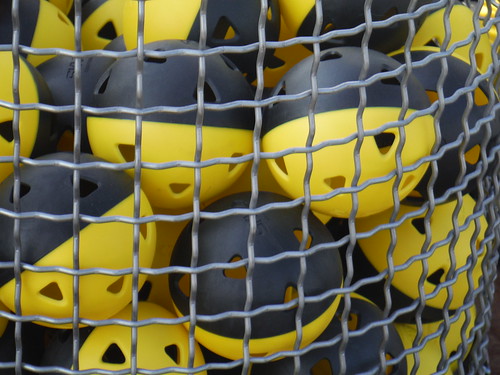
Casings with wiffle ball inserts

The latest customized contraptions along the Cuyahoga River bulkheads were added this month to help provide habitat for migrating fish, and the elements used in this phase of the project might surprise you.

Cuyahoga County Planning Commission, with the help of Biohabitats and the Regional Sewer District, installed the iteration of these baskets October 7 along the steel bulkheads of the Cuyahoga River navigation channel. They are intended to provide a safe space for fish migrating up or down the channel, a stretch that is otherwise "daunting," as Biohabitats describes it.


Tuesday, October 20, 2015

TRENDING: Never forget, it was a toilet that made time travel possible. #BackToTheFutureDay

Back To The Future's Doc Brown and his illustration of the time-travel-enabling flux capacitor.

The future has arrived. As the past. In the present. Thanks to a toilet.

October 21, 2015 has been declared Back To The Future Day, a day of '80s sci-fi nostalgia, the date to which Back To The Future's Marty McFly travels in the second movie of the trilogy in hopes of rescuing his future family.

What made the films' time travel possible was the flux capacitor. What made the flux capacitor possible? Remember, it was inventor Doc Brown slipping and falling off his toilet:


Sure, the flush toilet was considered the greatest medical advancement of the last 200 years. But in the BTTF universe, it became—more importantly—the greatest inspiration of the entire space-time continuum.

Heavy. We know.

RELATED STORIES

Friday, July 31, 2015

LOOK: What happens one hour after drinking one glass of tap water

The possible health effects of a can of soda have been blogged and tweeted about for a long time, most recently in an infographic that made its rounds this week.

How your body responds to a glass of tap water? Perhaps even more shocking.


View full size.

Wednesday, June 24, 2015

LIST: 5 reasons mayflies are nothing like giant mutated man-eating ants


When meteorologist Mark Johnson posted a radar image yesterday of a cloud of mayflies swarming over Lake Erie, it was almost intimidating, like something you'd see in a B-movie trailer foretelling a fight scene between mutated bugs and a clan of outmatched but gutsy Clevelanders.

One move that came to mind is 1977's Empire of the Ants (what do you mean you've never seen it?!) But before you stock up on bunker supplies and take cover, there is really no reason to fear mayflies.


Here are five reasons a swarm of mayflies are so nothing like the ants of 1977 B-movie fame.

Tuesday, June 23, 2015

NOTICE: Water quality advisory posted at Edgewater as a result of early morning storm, overflow

This morning, the Northeast Ohio Regional Sewer District posted a public advisory at Edgewater Beach, a result of a combined sewer overflow (CSO) event which discharged raw sewage into Lake Erie during this morning’s heavy rain storm.

Visitors—particularly children, the elderly and those in ill health—are advised to avoid contact with the water and debris.

“Edgewater is yet another example of why we need to continue to be aggressive in investing in our sewer infrastructure, particularly if want to continue to capitalize on the good work of the Cleveland Metroparks and those who are developing along the lakefront,” said Sewer District Chief Executive Officer Julius Ciaccia recently.

“Otherwise, to ignore the problems, like combined sewer overflows, stormwater run-off, failing septic systems, and illicit connections of sanitary sewage to storm sewers, that plague our local waterways would be irresponsible, and would squander the past investments made to keep our Great Lake great.”

Since 1972, the Sewer District has reduced the volume of CSO by half—from 9 billion gallons to 4.5 billion gallons—and continues efforts to reduce CSO from entering local waterways. The Sewer District has $3 billion plan—Project Clean Lake—which will further reduce overflows from 4.5 billion gallons to 500 million gallons by 2036 through the construction of large-scale storage tunnels, green infrastructure, and wastewater treatment plant upgrades.

Wednesday, June 10, 2015

HEALTH: 5 facts about hydration, because Dellavedova may be human after all #GetWellyDelly #ALLinCLE


Following Cleveland Cavalier Matthew Dellavedova's 20-point lay-it-all-on-the-line performance in NBA Finals game 3, reports surfaced that he was hospitalized with severe cramping. It was the first indication that he may indeed be human.

Cramps are commonly caused by some combination of dehydration, muscle fatigue, and inadequate salt intake, reports cleveland.com's Andrew Tobias. As we wish Delly a quick recovery, here are 5 fast facts about keeping your body hydrated.

1. Start with water. Amidst NBA Finals advertising, sports drinks fill much of the air time, but old-fashioned H2O is a good way to start. When working out, it is recommended that you drink 7-10 ounces of water every 20 minutes.

Thursday, January 8, 2015

GAMES: "You have died of cholera," and other health lessons #OregonTrail teaches us


You have died of cholera. Ah, the memories.

Adults who grew up with Apple IIs in the classroom in the 1990s are having a nostalgia field day now that the Internet Archive has made more than 2,000 MS DOS games available online, including the memorable Oregon Trail.

What makes it relevant to a Sewer District blog (and you, fine reader) is a look at the diseases that plagued the pioneers: Cholera, dysentery, and typhoid fever, among others. You might not have realized it as a child, but the first three are caused by a lack of proper sanitation and still relevant today.

Tuesday, November 18, 2014

QUIZ: Are you one of the 2.5 billion? #WorldToiletDay

More than 2.5 billion people around the world suffer from improper sanitation. In honor of World Toilet Day, we can determine if you're one of them by this simple quiz. Take it and see.


Sunday, July 20, 2014

HEALTH: Coffee, your colon, and how your brew affects your morning movement


Your morning ritual of a cup of joe likely has an effect on your other morning rituals.

The blunt but apparently popular question—"Why does coffee make me poop?"—makes its round on common news and health websites. There seems to be agreement that caffeine and other substances from the brew do often get our colonic muscles going, generating a reaction in our bodies similar to eating a meal.

Cleveland Clinic's HealthHub offers other educational resources on digestive health and dietary recommendations. Might be worth scrolling through as you enjoy your next cup.

With all the coffee, tea, and other caffeinated drinks so popular, does it have any affect on wastewater? Caffeine actually is a notable substance we find in wastewater, and it's one of several contaminants, like pharmaceuticals and even artificial sweeteners, we and other agencies across the country are actively monitoring in the environment.

Thursday, June 12, 2014

HISTORY: How a dying river saved our lives.

Two men wearing life jackets on a small boat on Lake Erie, 1976. Both the boat and the men are covered in oil polluting Lake Erie. Image courtesy of Cleveland State University Library Division of Special Collections.

When the oozing Cuyahoga River caught fire in 1969, consider that it might not have even made the "Top 10" list of Cleveland river fires at the time.

A spark ignited pollution on the Crooked River on June 22, 1969—but few today realize that it actually was the thirteenth time it had happened.

Thirteen times. Take that in for a moment. The river had once been so polluted and abused since the 1860s that tar-black layers of filth burned on its surface on at least 13 other occasions.

Tuesday, April 8, 2014

HOME: A healthy environment starts at home, and it might start with these 33 tips.


If this is what it looks like under your kitchen sink, there has to be a better way. Better for you, better for our water, and better for the environment.

From eco-friendly cleaning solutions, to disposal tips for those trash items that don't belong on your curb, we have a handbook full of helpful information to protect our environment and make your home healthier.

Of the more than 30 tips, instructions and resources we highlight as you scroll or download the handbook below, here are just a few:
  • Why you shouldn't pour fat or grease down your garbage disposal
  • How to get rid of old outdated prescription medications safely
  • Why fluorescent bulbs don't belong in your trash
  • What do do with old motor oil, car batteries, or tires
  • How to control your lawn or yard without chemicals
If you would like to request copies of this handbook for an event or community group, contact us.

Friday, January 17, 2014

BUSINESS: You might not think of our work, but we know exactly how to treat your business right.


We treat almost 200 million gallons of wastewater every day. That means 90 billion gallons a year, and that means we know business.

By any euphemism you prefer, the wastewater you flush, flowing through hundreds of miles of sewers under your feet in Northeast Ohio, is treated safely and returned to Lake Erie. We understand what clean water means to public health, and we take that responsibility very seriously.

Cleveland and its surrounding communities are built upon a sewer network that, in places, dates back to the 1870s. We're proud to be the foundation on which Cleveland is making its comeback, and with more than $3 billion of regional infrastructure investments planned through 2035, our work will be part of an even cleaner future for businesses, residents, and our environment.

“We hope that people realize that infrastructure is more than convention centers and bridges: billions of dollars of investment are just below your feet," said Jenn Elting, Public Information Specialist at the Sewer District.

So next time you get down to business, rest assured we'll do what it takes to keep our Great Lake great.

Thursday, December 5, 2013

VIDEO: 1928 school film shares how to treat sewage, how to set rat traps, and how not to catch malaria, typhoid, or the bubonic plague


Throwback Thursday is an opportunity to harken back to a time when we used the words "hence" and "typhoid" in daily American conversation.

The 4-minute clip above is from a 20-minute 1928 educational silent film called "Health and Hygiene" which focused on the causes of common diseases and their remedies.